The History of La Casa Azul: From Family Home to Museum
History of La Casa Azul: built in 1904, when it turned blue, Frida and Diego's years there, the 1958 museum opening and the 2009 restoration.
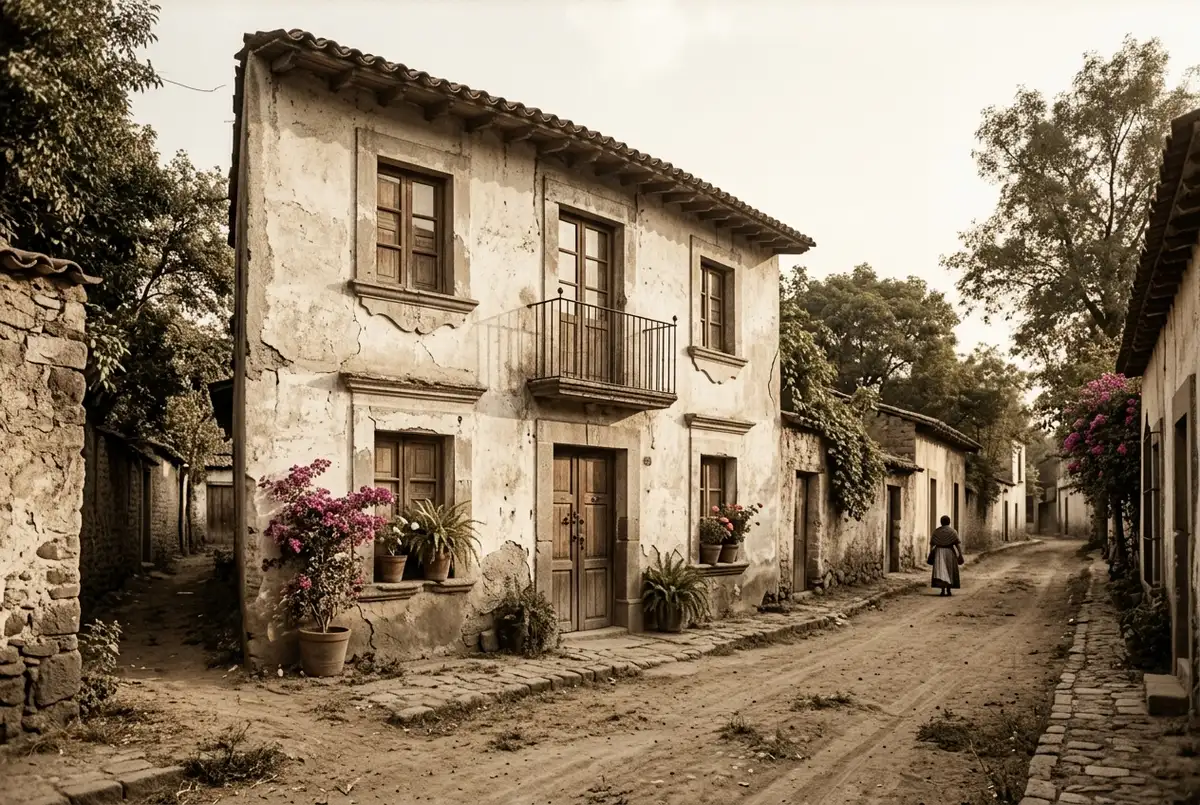
La Casa Azul's history starts in 1904, when Frida Kahlo's family had the house built; it became blue later under Diego Rivera's changes, then opened to the public as a museum in 1958, four years after Frida's death.
 Frida Kahlo Museum Official Entry Ticket: La Casa Azul, Coyoacán From $49.56 · Guaranteed entry, self-guided See dates
On this page 7 sections
The history of La Casa Azul runs through four distinct phases: a 1904 family home, the years Frida and Diego Rivera actually lived there, its 1958 opening as a museum, and a funded restoration decades later. I’d treat the house you visit today as the sum of all four, not an untouched relic.
The house's four phases
Source:Wikipedia and Museo Frida Kahlo official siteWhen was Frida Kahlo’s house built, and who built it?
The house was built in 1904 on land that had once belonged to a colonial era Carmelite hacienda in Coyoacán, three years before Frida Kahlo’s birth there.
Wikipedia’s account traces the property back to the former Hacienda del Carmen, a Carmelite holding from the colonial period, before the house itself went up in 1904. That makes the house a few years older than Frida herself, who was born inside it in 1907.
Why is it called La Casa Azul, and when did it turn blue?
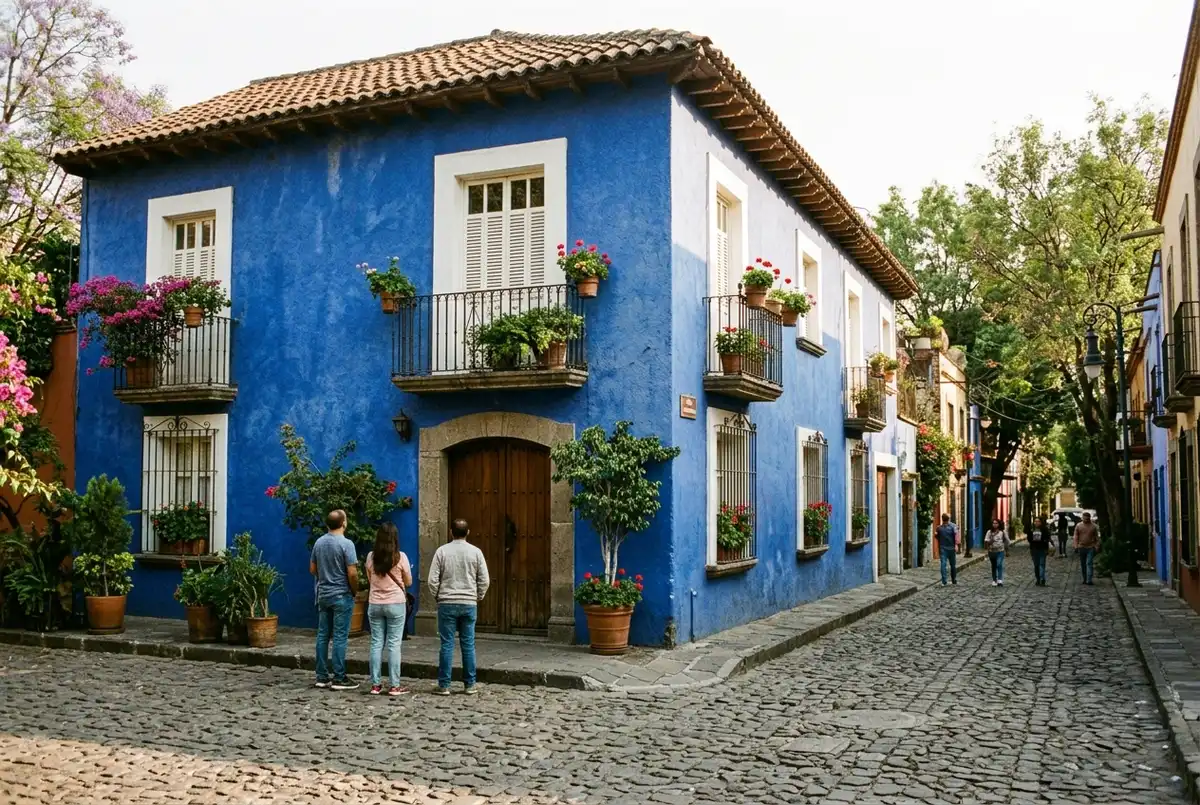
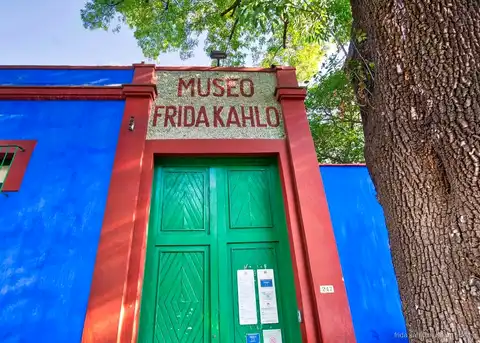
The house’s original exterior followed a French inspired design. The cobalt blue walls that give it its nickname came later, during the changes Diego Rivera made to the house in the 1940s.
That’s a detail most casual accounts skip: the house wasn’t always blue. Rivera’s building work, including enclosing the courtyard and adding the Londres Street wing, is what produced the plainer, cobalt colored facade visitors recognize today.
When did Frida Kahlo and Diego Rivera actually live in the house?
Frida and Diego made the house their home from 1931, and Frida both lived and died there, passing away on its upper floor in 1954.
The museum’s own site puts the date plainly: since 1931, the couple made the Blue House their home. Wikipedia’s account confirms she died there in 1954, at age 47, on the same upper floor.
When did La Casa Azul become a museum?
Diego Rivera donated the house to Mexico in 1958, four years after Frida’s death, and it opened as a museum with Carlos Pellicer as its first director, tasked with keeping the house as it was.
The museum’s own homepage states it opened as the Casa Azul Museum in 1958, and Wikipedia’s fuller account names Carlos Pellicer as that first director, with the specific instruction to preserve the house as it was rather than redesign it.
“Since 1931, Frida and Diego Rivera made it their home, and in 1958, it opened as the Casa Azul Museum.”
Museo Frida Kahlo official site, 2026 · source
Has the house changed since it became a museum?
It closed briefly in the early 1990s before reopening in 1993 with a shop and cafe added, and underwent a funded restoration in 2009 and 2010.
Wikipedia records that restoration as partly funded by the German government, which donated 60,000 euros, with the museum itself contributing a further one million pesos.
| Phase | Years | What happened |
|---|---|---|
| Family home | 1904 to 1930 | Built by the Kahlo family |
| Frida and Diego’s residence | 1931 to 1954 | Their shared home, Rivera’s additions |
| Museum opening | 1958 | Donated to Mexico, Pellicer as director |
| Restoration | 2009 to 2010 | German government and museum funded |
What does a visitor see inside the house today?
The house moves from Frida’s early paintings and personal mementos through Rivera’s enclosed courtyard wing to her preserved studio and bedroom, ending in the garden where the couple’s names are inscribed with the years they lived there.
Picture standing in that courtyard garden, reading an inscription that marks the years Frida and Diego lived in the house: it’s easy to assume the stepped stonework and reflecting pool around you were added later for visitors, when in fact they’re part of the same 1940s building work that gave the house its blue walls. For the fuller room by room picture, see what’s inside the museum, and for whether the visit is worth your time, see is the Frida Kahlo Museum worth it.
The house stands at Londres 247, Col. Del Carmen, Coyoacan, CDMX, Mexico, 04100, and there are no tickets sold at the door, so admission has to be booked online ahead of your visit; general admission also includes a courtesy visit to the Diego Rivera-Anahuacalli Museum nearby in Coyoacan.
Where the house sits in Coyoacán
Open in Google MapsQuestions
Is Casa Azul the same as the Frida Kahlo Museum?
Yes. Casa Azul is the common nickname for the same building officially known as the Frida Kahlo Museum. For more on the two names, see what to expect at the Frida Kahlo Museum.
Did Leon Trotsky really live in the house?
Mexico City’s own tourism site lists him among the notable figures who lived at or met with Diego and Frida in the house. The property’s garden land was purchased the same year, 1937, that he lived there.
How big is the house and garden?
No source used for this page states exact dimensions. Wikipedia’s account describes a 10 room house with a garden added in 1937, which is a modest scale for how much history it holds.
Who funded the museum’s restoration?
The 2009 to 2010 restoration was funded partly by the German government, which donated 60,000 euros, and partly by the museum itself, which added one million pesos.